FROM PAPER TO PIXELS: THE HIDDEN ENVIRONMENTAL COSTS OF THE DIGITAL ECONOMY
The digital revolution was supposed to make the economy cleaner and lighter. Instead, many environmental costs were displaced rather than eliminated. From forests and paper mills to data centres, Ronise Nepomuceno examines the hidden physical footprint of the digital economy.
By Ronise Nepomuceno
When the web first emerged, paper production and its disposal were amongst the most visible environmental concerns. This impact was particularly evident in the old-growth forests of the Northern Hemisphere. Back in the 1990s, in Canada, environmental campaigners warned that vast areas were being clear-cut for paper production. The pulp and paper industry was then one of the largest sources of water pollution.
In 1999, the World Wildlife Fund (WWF) warned in its Living Planet Report that half of the world’s original forest cover had already been lost, as a result of industrial logging for paper. Pulp and paper demand was a main pressure on global forests, according to the United Nations Environment Programme (UNEP).
The damage went beyond deforestation. Chlorine bleaching released toxic byproducts into rivers, while mill emissions contributed to dioxin contamination, acid rain and poor local air quality.

Fresh from university, I was writing about exactly that, with an article titled “Canada Stripped Bare”. My article reported on the destruction of old-growth forests in British Columbia. Trees were being cut for the production of telephone directories, advertising material, newspapers and magazines. Ironically, this included the very magazine in which my article appeared. My reporting soon took me beyond Canada. Together with the photographer Dylan Garcia, we collaborated with the Finnish Nature League, visited paper mills in Finland, and travelled to Russia, where we spoke to scientists tracking the fate of ancient forests across the border.
One of them showed me an image I never forgot. As we introduced ourselves, he unrolled a printout of a satellite picture of the border between Finland and Russia. One side was green and lush with Finnish-managed forests. The other was bare and brown. The border between the two countries could be clearly seen from space due to deforestation.
After the fall of the Soviet bloc, Finnish loggers were constantly travelling into Russian old-growth forests, taking advantage of weaker regulation and looser controls. While politics had drawn a line on the map, an extractivist industry had carved it into the land.
From this perspective, it becomes easier to forgive the early belief that digital systems would reduce humanity’s environmental footprint. We had a reason to believe that paper would vanish, offices would declutter, and communication and shopping would become cleaner and less wasteful.
For a while, evidence seemed to support that hope. Printing declined. Filing cabinets disappeared from the office floor. Emails replaced internal memos. The Forest Stewardship Council (FSC) logo on paper packs reassured consumers about the origin of every single sheet. The familiar line at the bottom of emails, asking people not to print unnecessarily, signalled that the problem was largely solved by screens.
Digital technologies and connectivity can help accelerate green transformation in many ways. For instance, they can reduce unnecessary travel, improve efficiency, optimise systems, and replace some paper-based processes. Nevertheless, their own environmental footprint is far from negligible.
The web did not dematerialise things. It just produced displacement: a shift from visible, localised systems to distributed, infrastructure-heavy global ones. In that transition, a new set of environmental and social externalities emerged, harder to see and therefore easier to ignore.
The growing rollout and use of AI Large Language Models, which are even more energy and water-intensive, will only exacerbate this problem. The web did not dematerialise things. It just produced displacement: a shift from visible, localised systems to distributed, infrastructure-heavy global ones. In that transition, a new set of environmental and social externalities emerged, harder to see and therefore easier to ignore.
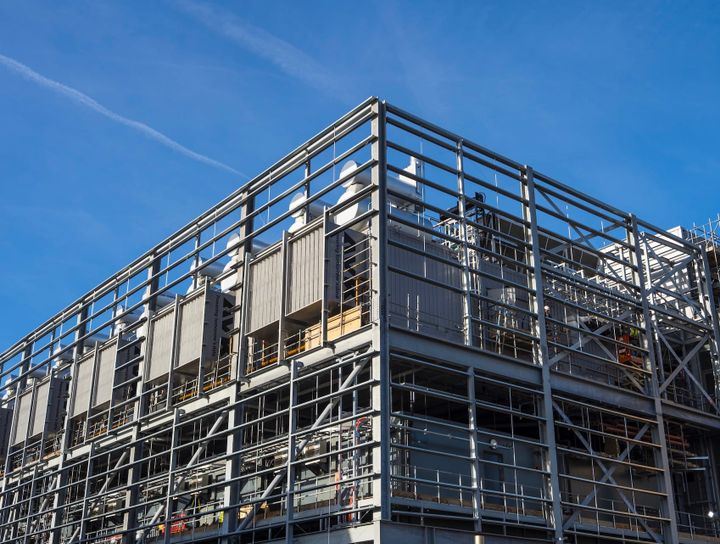
According to the International Energy Agency report on Energy Demand and AI, Data centres now use around 415 terawatt-hours of electricity each year, about 1.5% of global demand. This already surpasses the annual electricity consumption of countries such as Sweden or Argentina. By 2030, use could reach 945 terawatt-hours, approaching Japan’s or Germany’s current levels. Artificial intelligence is expected to drive that increase, with AI-optimised data centres growing particularly fast.
World Bank reports suggest that information and communication technology accounts for 1.5 to 4 per cent of global greenhouse gas emissions. In other words, the climate impact of this industry is now in the same range as aviation. This is far from a minor issue.
Energy, however, is only part of the story. Like paper production, the digital economy has its own rapidly growing waste stream. In 2022, around 62 million tonnes of e-waste were discarded worldwide, yet only 22.3 per cent was collected and recycled in an environmentally sound way, as reported by ITU and UNITAR in The Global E-waste Monitor 2024. Much of the rest was dumped, burned, traded or processed informally, releasing hazardous substances and wasting valuable materials. By comparison, paper, for all its faults, belongs to a much more mature recycling system. In Europe, paper recycling rates are above 75%, according to the European Paper Recycling Council. Digital devices, by contrast, remain difficult to repair, recover and recycle at scale.
Paper is still relevant. In many richer countries, paper production is cleaner than it was in the 1990s. Pollution controls have improved, and bleaching processes have changed. Recycling rates have gone up. Globally, forest loss has slowed down compared to the late 20th century, although this does not mean forests have simply recovered. The key findings from the Global Forest Resources Assessment 2025, report that some areas of primary forest have continued to decline sharply since 1990. Naturally regenerating and biodiverse forests are still shrinking.
So what became of the old dream that digital would save trees and lighten humanity’s carbon footprint?
Digitalisation has brought genuine benefits, but not in the simple, weightless way many imagined. Replacing print newspapers, magazines and physical media with digital versions has curtailed demand for paper, printing and transport.
Commuting and business travel were reduced by remote work and online meetings. Certain kinds of waste have genuinely declined, especially those traditionally associated with paper. But the damage did not disappear. It just became harder to see, spreading across data centres, semiconductor plants, grids, warehouses, mines, logistics chains and everywhere.
Meanwhile, the demand for paper-based packaging increased, as per the paper "Product Packaging by E-commerce Platforms: Impact of Covid-19 and Consumer Behaviour" by Arora et al. Although often presented as greener than plastic, it still relies heavily on wood, water and chemicals, and is not always easy to recycle. This is further explained by the report "Disposable Paper-based Food Packaging: The False Solution to the Packaging Waste Crisis", by the European Bureau et al.
Consumer Power
Although consumer choices cannot solve these problems alone, they can still influence demand and shape the digital economy we want and accept. The paper industry shows that consumer pressure is effective. Habits and expectations changed, and industry practices shifted. The same principle applies to digital systems.
The change starts with one of the highest-impact actions available to most of us: keeping devices in use for longer. The environmental burden of digital technology does not sit only in the electricity used to power a screen or a search. A large share is embedded in extraction, manufacturing and distribution. Extending the life of a phone, laptop, or tablet reduces demand for new production and delays entry into the waste stream. Repair, refurbishment and second-hand purchasing are therefore not minor gestures. They are among the most practical ways to reduce digital environmental impact.

Choosing a brand that offers longer support for updates, easy repair options, or readily available spare parts is one good point of pressure that can come from consumers. Another shift is to be more thoughtful about bandwidth-heavy habits. Not every interaction needs video, high definition or an energy-intensive AI query.
A great deal of difference can be made by changing shopping habits. Backing local businesses helps preserve community value and can reduce some of the hidden costs of digital retail. When buying online, combining purchases, avoiding split shipments and skipping unnecessary next-day delivery can reduce pressure on warehousing and logistics.
Employing a team of Digital Accessibility specialists who can implement and support semantic HTML and WCAG standards goes beyond compliance. It helps create more inclusive, robust and efficient services that work better across devices, browsers and network conditions. Accessible, well-designed websites and apps often load faster, use less data and require less processing power, improving inclusion and reducing environmental impact.
For those who design and build digital products, the gains are greater still. A better design can also mean a lighter design. Simpler code, cleaner architecture and stronger accessibility practices can improve performance while reducing complexity. Employing a team of Digital Accessibility specialists who can implement and support semantic HTML and WCAG standards goes beyond compliance. It helps create more inclusive, robust and efficient services that work better across devices, browsers and network conditions. Accessible, well-designed websites and apps often load faster, use less data and require less processing power, improving inclusion and reducing environmental impact.
The first step towards a more accountable digital future is to stop thinking of digital systems as invisible or weightless. They are physical, resource-demanding and consequential. Once we all understand that, we can ask better questions, not only about what solutions technology brings, but also about the real costs to the environment and society, who bears those costs, and what kind of future we are building through the choices we normalise every day.